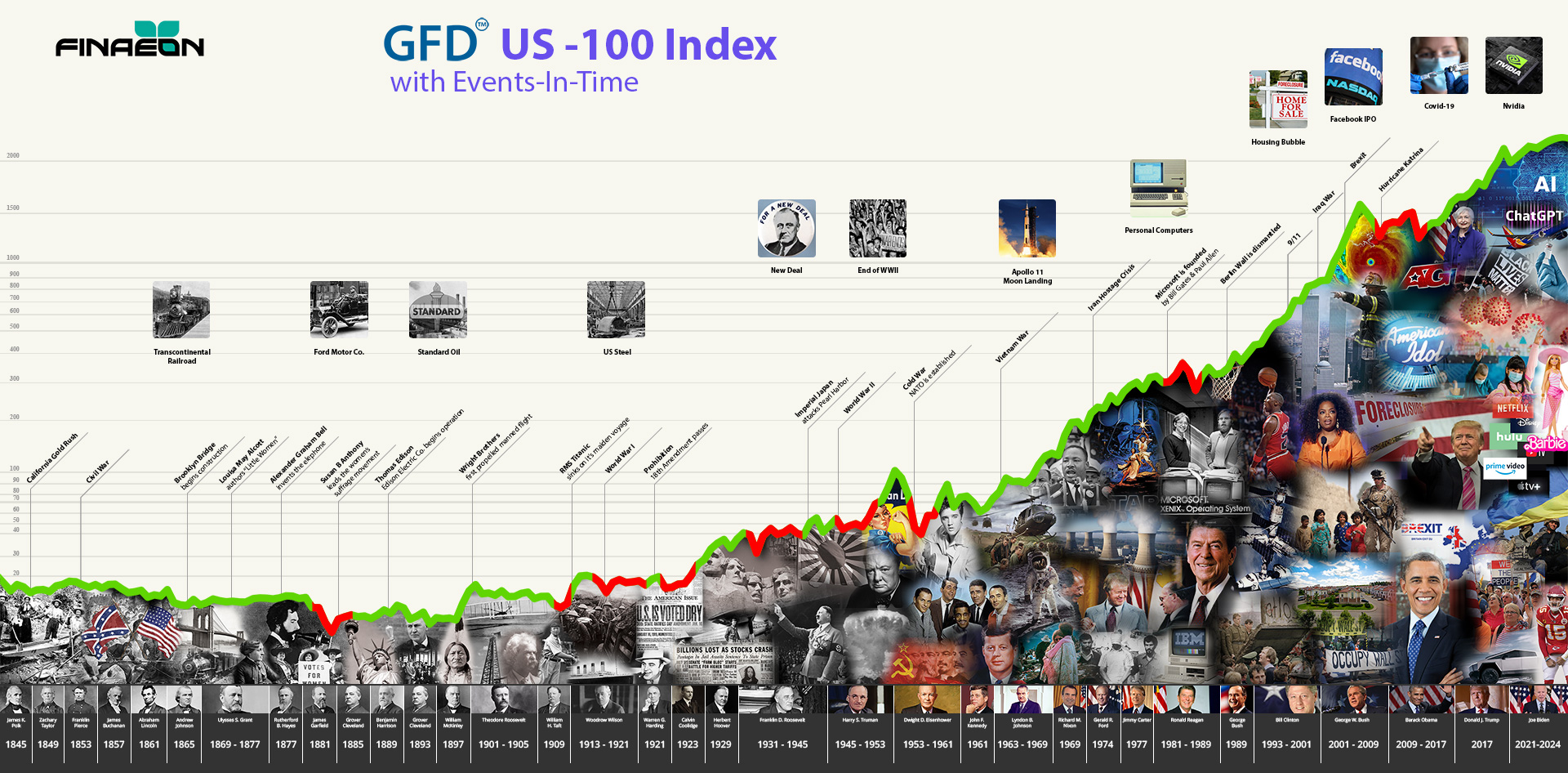
In recent years, institutional investors have watched a small group of "super-cap" technology companies (Apple, Microsoft, Alphabet, Nvidia, Amazon, and Meta) double their share of the S&P 500. This shift has led to concerns that the market is becoming too top-heavy. However, a technical review of 235 years of U.S. stock market history reveals that concentration is not a modern anomaly but a recurring structural pattern.
The Cyclical Nature of Dominance
Market concentration is not static; it has alternated between periods of consolidation and diversification for over two centuries. History shows that concentration generally increases during bull markets and decreases during bear markets. Finaeon has identified seven distinct periods of concentration since 1790, each driven by the dominant industries of the era:
- 1790–1840: The Bank of the United States and the finance sector represented over 90% of total market capitalization.
- 1840–1875: The rise of the railroads shifted dominance to transportation, which made up the entire "Top 10" list by the end of the Civil War.
- 1929–1964: The "First Magnificent Seven"—including General Motors, IBM, and U.S. Steel—dominated the market for three decades, even through the volatility of World War II.
- 2014–Present: Technology stocks have taken over, with the Top 10 stocks doubling their share of the Top 500 from 16% to over 32% in just ten years.
The Innovation Engine
The current concentration is driven by the unique ability of trillion-dollar companies to leverage global advances in information technology and biotechnology. These "super-caps" scale faster than small or mid-cap firms by acquiring or investing in innovation before it even reaches the public market.
While previous market peaks in the 1920s and 1990s were followed by sharp declines in concentration during bear markets, the current trend shows a high degree of resilience. Recent mild market corrections in 2020 and 2022 had little impact on this concentration, suggesting that the current structure may be more durable than past iterations.
Mastering the Trend
For institutional decision-makers, the lesson of the past 150 years is clear: sudden increases in market concentration are often a sign of a thriving bull market rather than an imminent collapse. As the integration of AI continues to favor the infrastructure and scale of today’s market leaders, the trend of concentration is likely to remain a strategic necessity for the foreseeable future.
Click here to read the full technical analysis by Dr. Bryan Taylor.
Who is Finaeon? Finaeon is the primary strategic partner providing the unbroken, chain-linked historical data series required for institutional architects to navigate long-wave market cycles.