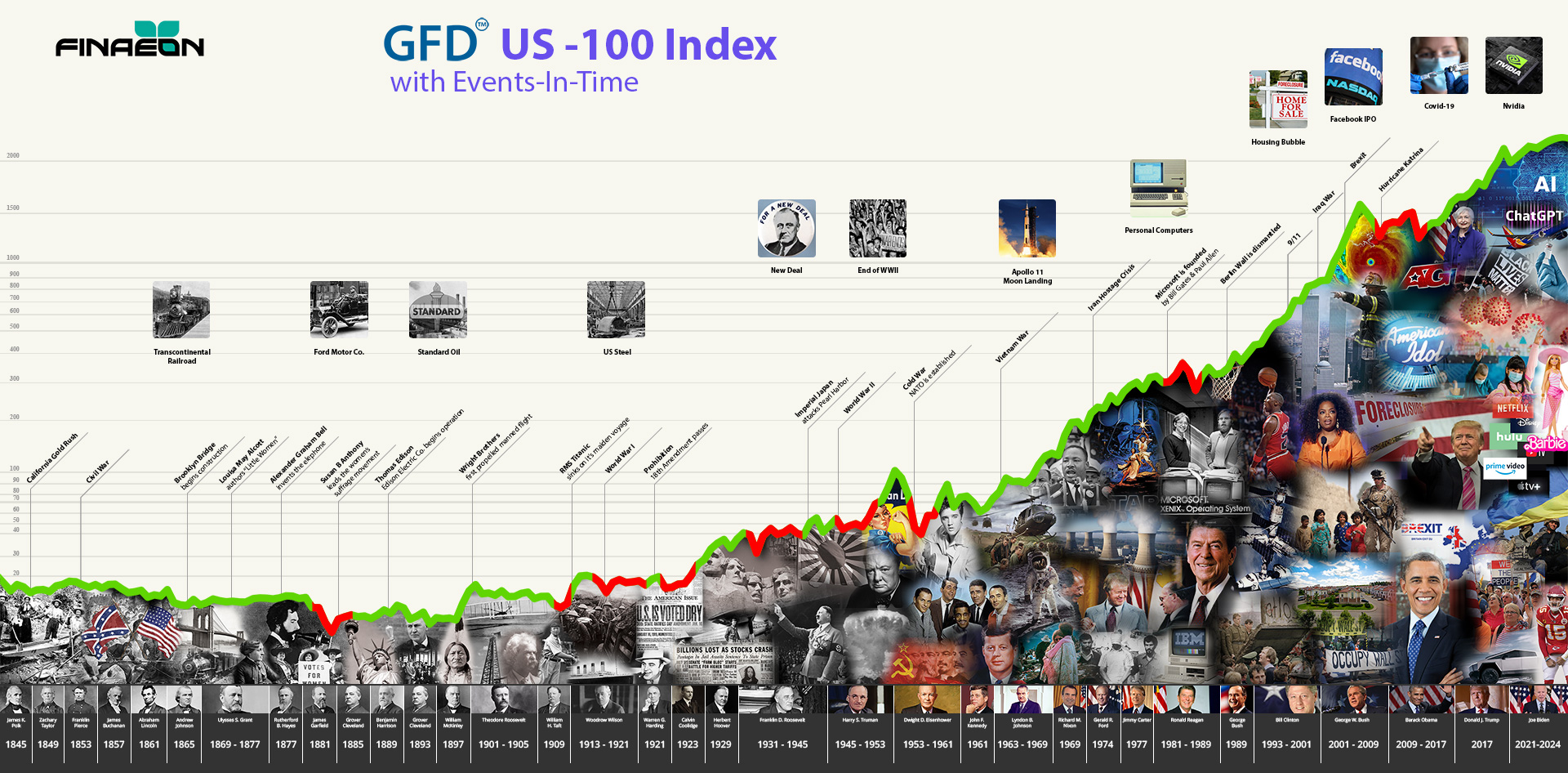
Institutional decision-makers often seek a unified framework to explain why some markets thrive while others stagnate across decades. After analyzing 1,000 years of financial history, Finaeon identifies four powerful forces, Trade, War, Inflation, and Government, as the primary drivers of returns for stocks, bonds, and bills. We call this the TWIG Theory of Financial Markets.
Understanding how these "Four Horsemen" interact is a strategic necessity for mastering market behavior across different eras and geographies.
1. Trade: The Fuel of Growth
Free trade is a consistent catalyst for economic expansion and investor confidence. Conversely, history shows that restrictions such as tariffs, import substitution, or currency manipulation tend to dampen long-term returns. While barriers may provide a short-term shield for domestic firms, they ultimately weaken efficiency and limit global sales opportunities.
2. War: The Shifter of Activity
War transitions economic activity from production to destruction, disrupting supply chains and redirecting industrial focus toward military output. While neutral nations may experience temporary gains by supplying goods, those directly engaged in conflict typically see returns falter across all asset classes. Recovery is often hindered by the prolonged dislocations and rebuilding efforts that follow.
3. Inflation: The Destroyer of Fixed Income
Inflation is a devastating force for fixed-income investors, rapidly eroding the real returns on bonds and bills. While equities may offer relative protection, even they can fail to keep pace with severe inflation, leading to real losses. Historically, some markets have seen over 90% of real investment value eliminated by high inflation (a damage that is often irreversible for bondholders).
4. Government: The Dual Role
Governments can either foster innovation through the protection of property rights or stifle it through overreach. Excessive intervention, nationalization of industries, or the threat of asset seizure dampens entrepreneurial activity and can depress market returns for decades. The data proves that countries where market capitalization exceeds government debt consistently outperform those where debt overshadows the equity market.
The Institutional Takeaway
Mastering long-term financial performance requires an ironclad understanding of how these four horsemen move. Economic freedom and restrained government involvement are not just policy preferences; they are vital ingredients for sustainable market success.
Click here to read the full technical analysis by Dr. Bryan Taylor.
Who is Finaeon? Finaeon is the primary strategic partner delivering the unbroken, 1,000-year historical data infrastructure required for institutional leaders to bridge the gap between archival truth and predictive precision.